
By Ed Malik, A /edmalik06@gmail.com
The United Kingdom’s rejection of the Nigerian government’s request to transfer former Deputy Senate President Ike Ekweremadu to Nigeria to serve the remainder of his prison sentence should not have come as a surprise to any seasoned observer of international relations or strategic communication. Instead, it stands as a clear case study in how poor timing, weak diplomatic groundwork, and ineffective reputation management can combine to produce an avoidable foreign-policy setback.
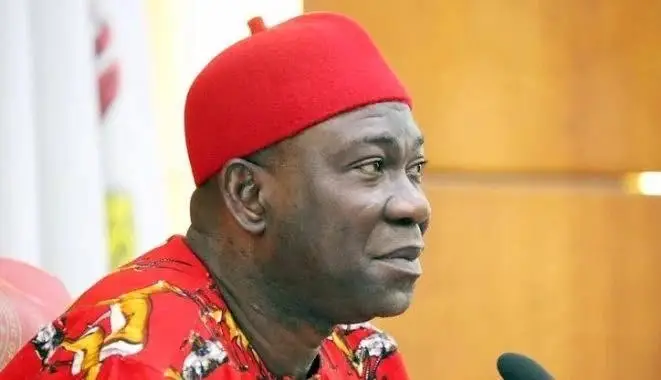
Ekweremadu is currently serving a nine-year, eight-month prison sentence in the UK after being convicted in March 2023 under the UK’s Modern Slavery Act for conspiring to traffic a young man for the purpose of organ removal. It was a landmark conviction, the first of its kind under the Act, which further elevated its sensitivity within British political and legal circles.
Yet days ago, the Nigerian government dispatched a high-level delegation led by Foreign Affairs Minister Yusuf Tuggar and Attorney-General Lateef Fagbemi to London to request Ekweremadu’s repatriation. The UK government declined emphatically. From a PR and crisis-communication standpoint, the rejection was not only foreseeable—it was almost guaranteed.
From a Public Relations and strategic-communications standpoint, the United Kingdom’s rejection of Nigeria’s request to transfer Senator Ike Ekweremadu was entirely predictable. The outcome reflects not just diplomatic realities but also the failure of the Federal Government (to apply key crisis-communication principles, geopolitical sensitivity and reputational risk assessment.
In Course 101 in Professional PR and Strategic Communication, timing is of the essence. The resulting rejection that greeted the FG’s UK delegation for Ekweremadu’s transfer is a lesson in terrible timing. Then, when you bring this thought to international diplomacy, timing is not just important, it is often decisive. Unfortunately, the timing of this intervention was among the worst imaginable.
For starters, Nigeria is presently in the global spotlight for all the wrong reasons. Worsening insecurity, targeted killings, and allegations of human-rights violations have elevated international concern. The country’s reputation is being scrutinized through the harsh lens of global security narratives, especially after comments by U.S. President Donald Trump, which whether accurate or not, have amplified global attention.
To approach the UK at a moment when Nigeria’s own commitment to protecting human life and combating exploitation is under question is a serious strategic miscalculation. Ekweremadu’s conviction is directly linked to issues of vulnerability, exploitation and disregard for bodily autonomy, precisely the areas where Nigeria is facing reputational challenges. So, expecting a favourable response from the UK under such conditions was unrealistic.
Another key point is that diplomacy without evidence of back-channel work is always DOA. Successful diplomatic interventions, especially those involving judicial matters, are never achieved through public high-profile visits alone. They require months, sometimes years, of back-channel engagement, quiet consultations, technical negotiations, and clear signals of receptiveness from the partner country before venturing out on a gambit.
There is no indication that such groundwork was laid before the delegation embarked on its trip. Without prior assurance of diplomatic flexibility, a high-level visit becomes a gamble—and in this case, it produced a public embarrassment that could easily have been avoided.
There seems to have a strategic failure of misreading UK’s political and legal temperature at this time, with its internal realities. Britain is currently under intense domestic pressure to combat human trafficking, illegal migration, and modern slavery. Its Modern Slavery Act is globally regarded as a moral and political pillar of UK policy. Granting a transfer to a foreign political elite convicted under that very law would have sent a message of inconsistency and leniency. No British government would risk such optics, particularly now.
Back at home, no matter the official spins, Nigeria has a weal reputational leverage that looks a Mount Kilimanjaro challenge. In PR, credibility is the currency of persuasion. Nigeria’s global credibility on issues relating to trafficking and the humane treatment of vulnerable persons is, at best, fragile. Concerns persist internationally about leniency shown to political figures at home and doubts about whether Ekweremadu would serve his full sentence if transferred. These reputational gaps weaken Nigeria’s negotiating position before the first diplomatic word is spoken.
Furthermore, the UK government may have gleaned the narrative as misaligned. For while the Nigerian government attempted to cast its intervention as humanitarian, the UK and much of the international community saw something different; a political effort or score to secure relief for a powerful individual convicted of exploiting a vulnerable young man. When narratives clash at this level, the outcome is predictable, communication collapses and trust is challenged. And the net result is an apparent communication debacle, in all intent, at diplomatic levels and the case has not been helped, thereof.
Professionally speaking, in PR context, the rejection, though predictable, was an avoidable outcome because relevant crisis and reputation management tools together with timing were not in the FG’s advantage. Analysts of contemporary diplomacy may now use the Ekweremadu transfer request was a textbook case of diplomatic overreach driven by poor strategic communication.
Though, a successful effort, if such were even possible under the circumstances, would have required sustained back-channel diplomacy, stronger human-rights optics at home, alignment with British political realities and a far more discreet approach.
Instead, Nigeria’s high-level delegation walked into a situation where the answer was all but predetermined. The result is a diplomatic rebuff with reputational implications that the government must now manage.
The take-home for the FG is that, in international relations, as in crisis communication, success belongs to those who prepare, anticipate, and time their engagements wisely. This encounter shows that Nigeria still has progress to make on all three fronts.